
Say Cheese! TV Headlines, Park Figures and Scene Cues
Match Say Cheese! TV headlines to their pictures, tell park figures apart, and recognize the OFF AIR, nested-TV and dark last-photo scenes.
The central park television in Say Cheese! pairs pictures with short headlines, including “OOH NICE HAT,” “WHY IS EVERYONE SMILING?” and “WHO PAID THE SCREAMER?” It stands among round-headed and square-headed figures. To recognize what you are looking at, watch residents’ headwear, the television’s picture and caption, the figures gathered around it, and the park’s lighting — concrete points to compare from scene to scene.
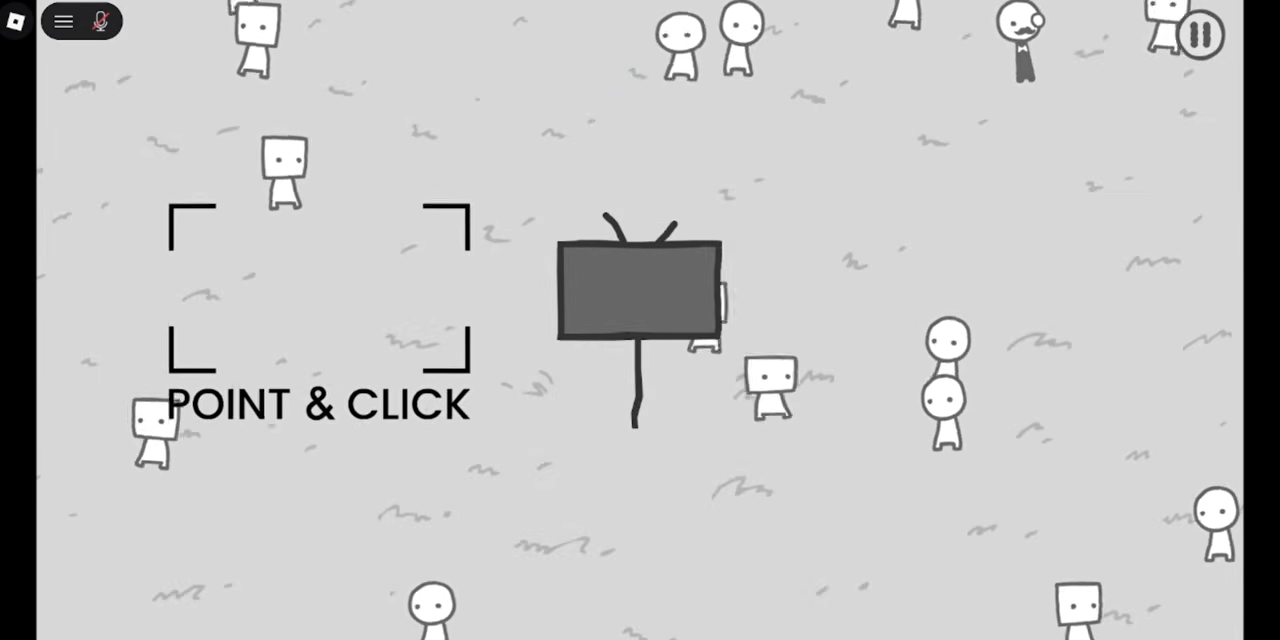
An early park view provides a useful baseline: round-headed and square-headed figures stand around a central television, with a camera viewfinder and “POINT & CLICK” on screen.
Match each TV headline to its picture
Read the caption alongside the pictured figure to follow who the report is featuring, and match the caption to the picture to recognize each report:
| TV headline | What the report depicts |
|---|---|
| OOH NICE HAT | A hat-wearing figure. In this scene, both round-headed and square-headed figures around the park also wear hats. |
| WHY IS EVERYONE SMILING? | A smiling figure, with the question written beneath it. |
| WHO PAID THE SCREAMER? | A money bag alongside two figures. |
| LOCAL PHOTOGRAPHER | An avatar on the television while rows of figures face forward. |
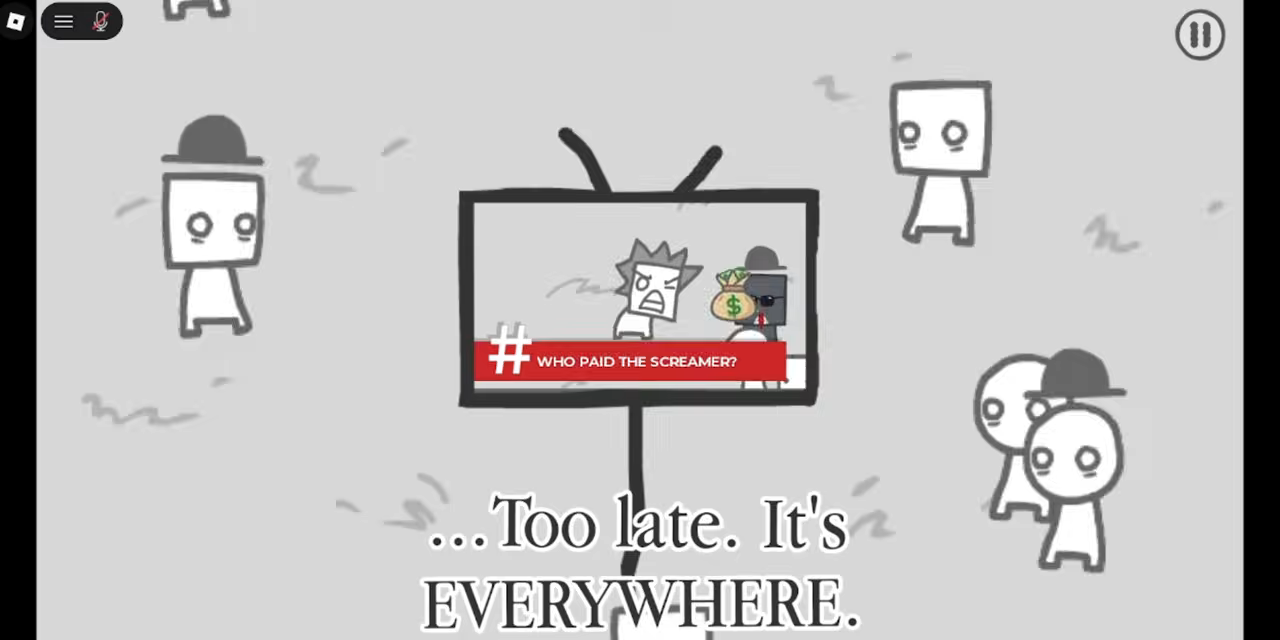
Treat the captions as displayed wording. The smiling report does not establish that every figure in the park is smiling; the money-themed report does not identify who paid anyone or establish a payment mechanic; and the avatar in the photographer report is shown without being identified.
Tell the park’s figures apart
Use head shape, hats, facial expression and clothing to distinguish the park’s figures, and keep the figure shown on the television distinct from the figures standing around it as you watch.
- The park includes figures with round heads and figures with square heads. Start with that visible difference when telling figures apart in a scene.
- A hat does not distinguish the two head shapes on its own. In the “OOH NICE HAT” scene, both round-headed and square-headed figures wear hats, so look at the head beneath the hat.
- Combine head shape and headwear for a precise reference: “the square-headed figure wearing a hat” points someone out more exactly than “the figure with a hat.”
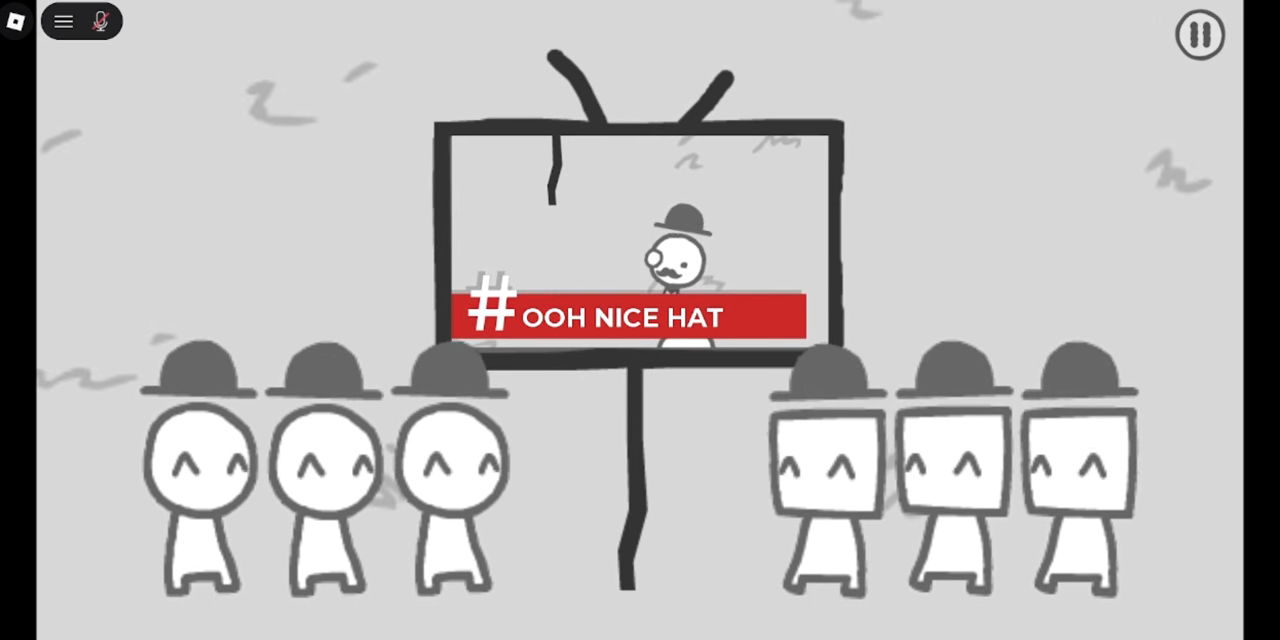
The televised reports work the same way. In the hat and smile reports, the screen highlights one visible feature — a hat, or a smile — and that feature is the cue to the figure being featured. In the “OOH NICE HAT” scene, check the residents and the broadcast together: the matching headwear is the scene’s distinctive visual detail.
Recognize the “OFF AIR” gathering
Look for a group of figures surrounding the television while its display reads “OFF AIR”. A suited figure and money are nearby in this scene. The display, the gathering and the nearby details together make the scene recognizable, and the suit and position help distinguish the suited figure near the television.
Recognize the nested-TV scene
One dark scene shows television images repeated inside the TV display, creating a screen-within-a-screen effect.
Recognize the dark last-photo scene
A last-photo scene presents the park in darkness, with the camera frame visible and the instruction “click to take the last photo”.
The camera frame also appears in the early “POINT & CLICK” view, so check the lighting and prompt together. Darkness paired with the last-photo instruction is the clearest cue for recognizing this scene.
How to use these cues
These recognition cues come from separate scenes. They tell you what each scene shows and who is standing where — they are not an established causal sequence, a trigger guide, a named character roster, or an ending route.